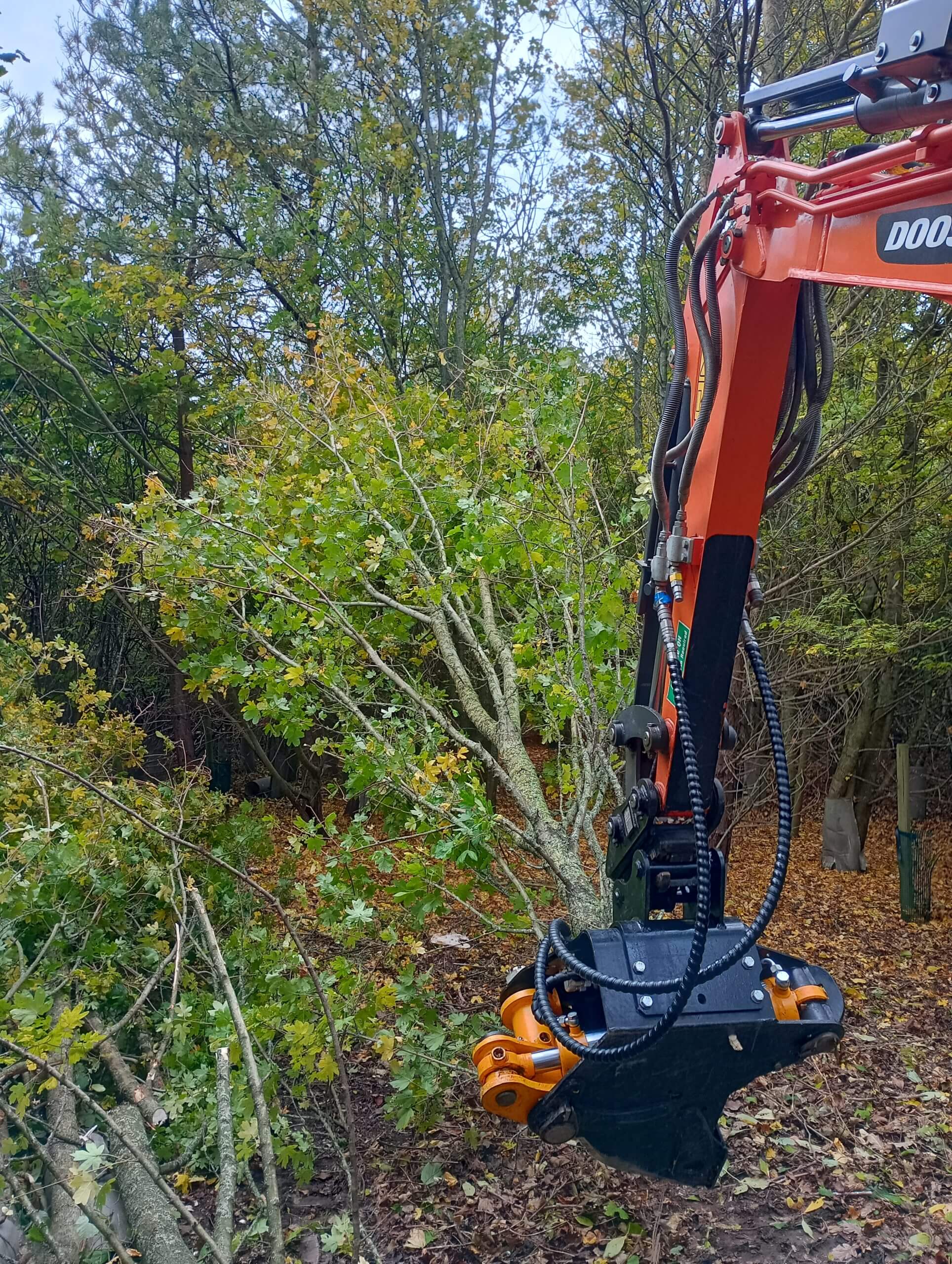
The enhancement works included a range of biodiversity and habitat improvements. These involved thinning existing plantations by creating rides and glades, as well as coppicing and pollarding several overhanging trees near the site compound. Additionally, we constructed three hibernacula, installed thirty-eight species-specific nesting and roosting boxes, and fitted a dedicated barn owl box to support local wildlife.
Challenge
Location of services
Working with the client we identified the location of the underground services, with crossing points created using ground protection and offsets marked out using barrier tape.
Creating Rides and Glades
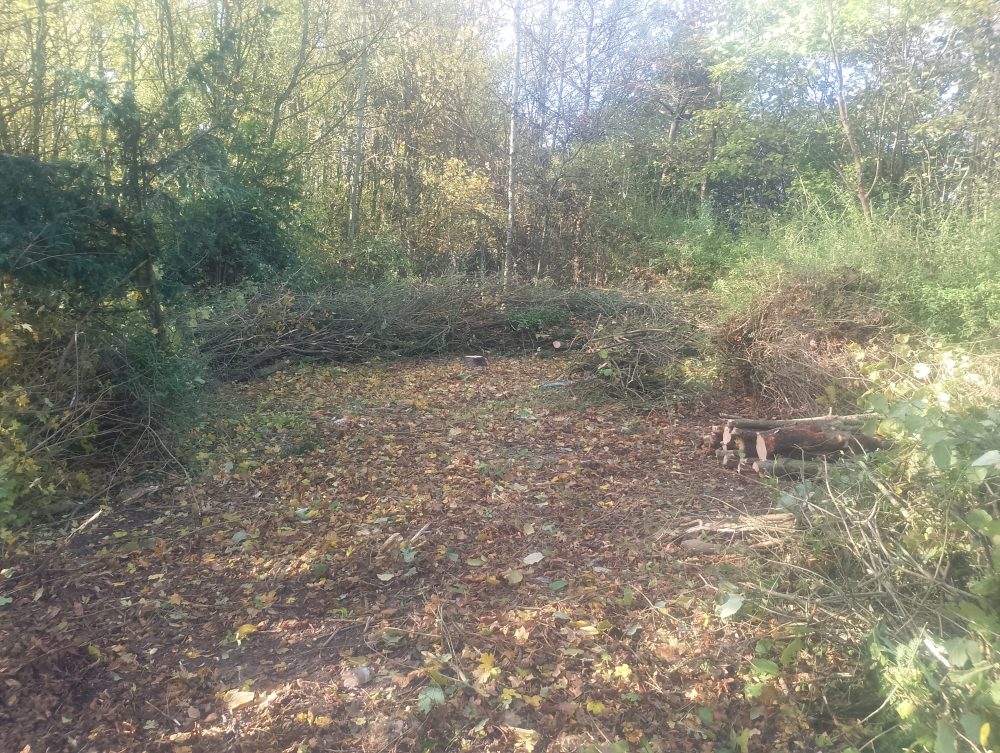
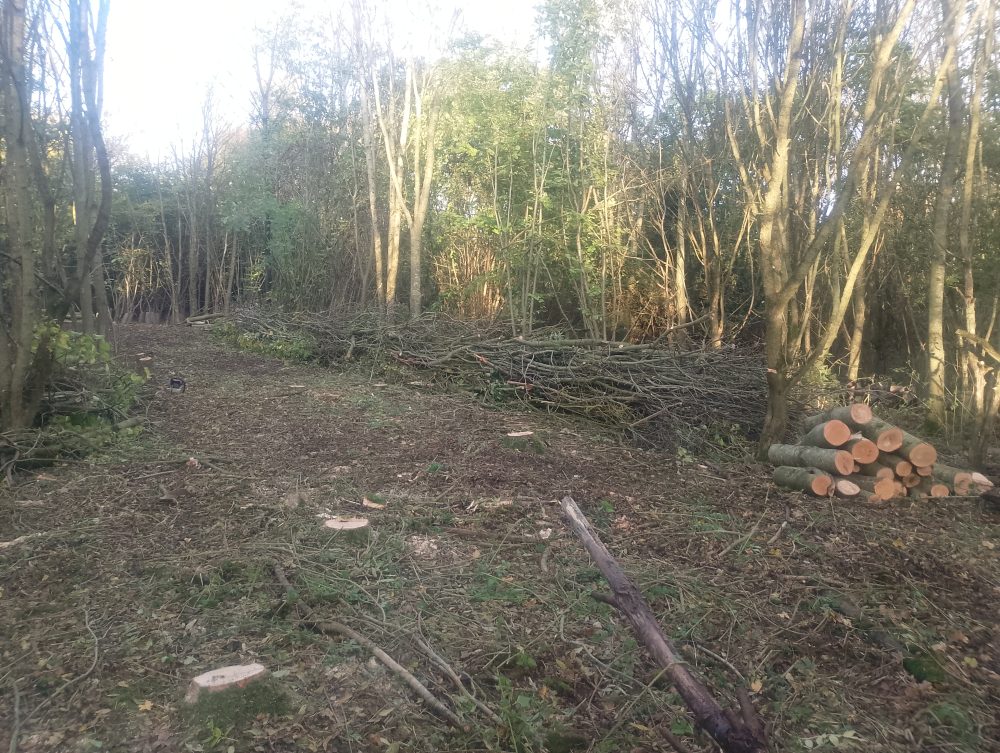
A network of rides and glades was carefully planned with 20% of trees to be removed to open areas of the woodland to more light.
Coppicing, Pollarding and Pruning:
Several trees overhanging the central compound were coppiced, pollarded or pruned to reduce the likelihood of branch fall into the utilities compound.
This included one large willow tree that was pollarded by the in-house arb team using sectional felling and rigging techniques.
Installation of Wildlife Habitat Features
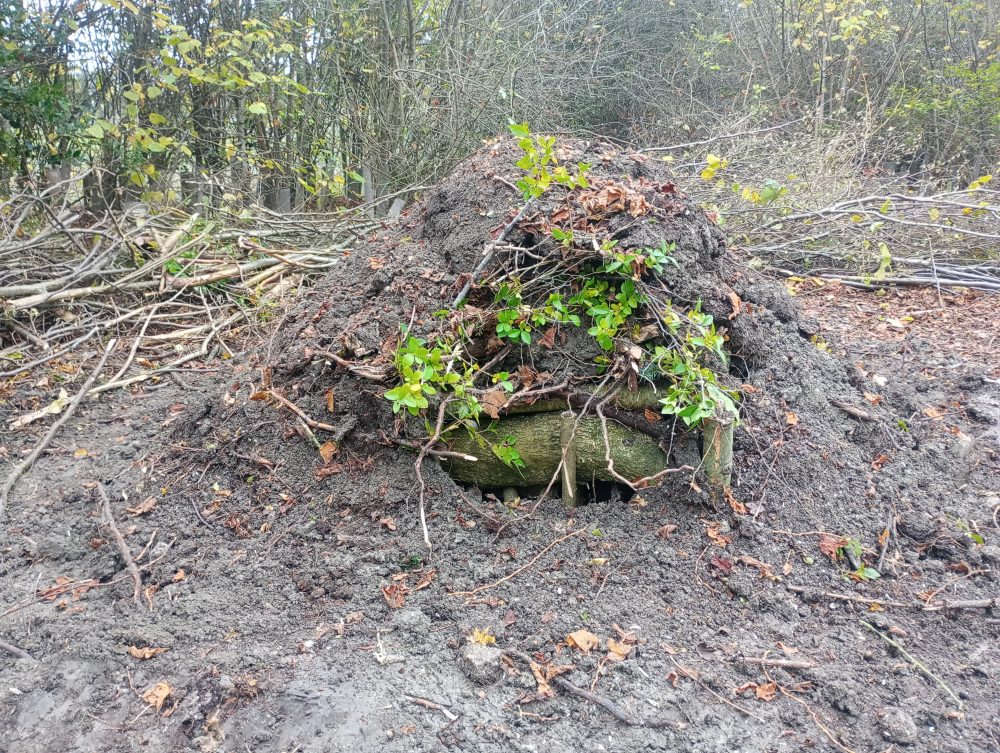
Three hibernacula were installed, using a mix of site won materials such as stone and logs to provide a variety of overwintering options for amphibians, reptiles, and invertebrates.
Bat Boxes
Boxes suitable for species such as Noctule, Daubentons, Pipistrelle and Bechsteins bats were placed on suitable trees, particularly near the rides and glades, where there is increased foraging opportunity.
Bird Boxes
A variety of bird boxes were installed, targeting different species such as Thrush, Tits and Firecrest. These were positioned at different heights and locations, offering nesting opportunities in both open and sheltered spots.
Dormouse Boxes
Dormouse boxes were placed approximately 1.5m from the ground in locations near to potential food sources with the entrance hole facing in towards the tree trunk to reduce occupation by birds.
Barn Owl Box
An Ash tree located in a suitable position for a barn owl box was found on site. The in-house arb team undertook aerial crown removal, turning the tree into a monolith (a tree reduced to its main stem) upon which the barn owl box was fixed.
Dead Hedge
The Keystone Habitats team created approximately 450 linear meters of 1-metre-tall dead hedge along the edges of the rides and glades.
Approach
Location of services
Working with the client we identified the location of the underground services, with crossing points created using ground protection and offsets marked out using barrier tape.
Creating Rides and Glades:
A network of rides and glades was carefully planned with 20% of trees to be removed to open areas of the woodland to more light.
Coppicing, Pollarding and Pruning:
Several trees overhanging the central compound were coppiced, pollarded or pruned to reduce the likelihood of branch fall into the utilities compound.
This included one large willow tree that was pollarded by the in-house arb team using sectional felling and rigging techniques.
Installation of Wildlife Habitat Features
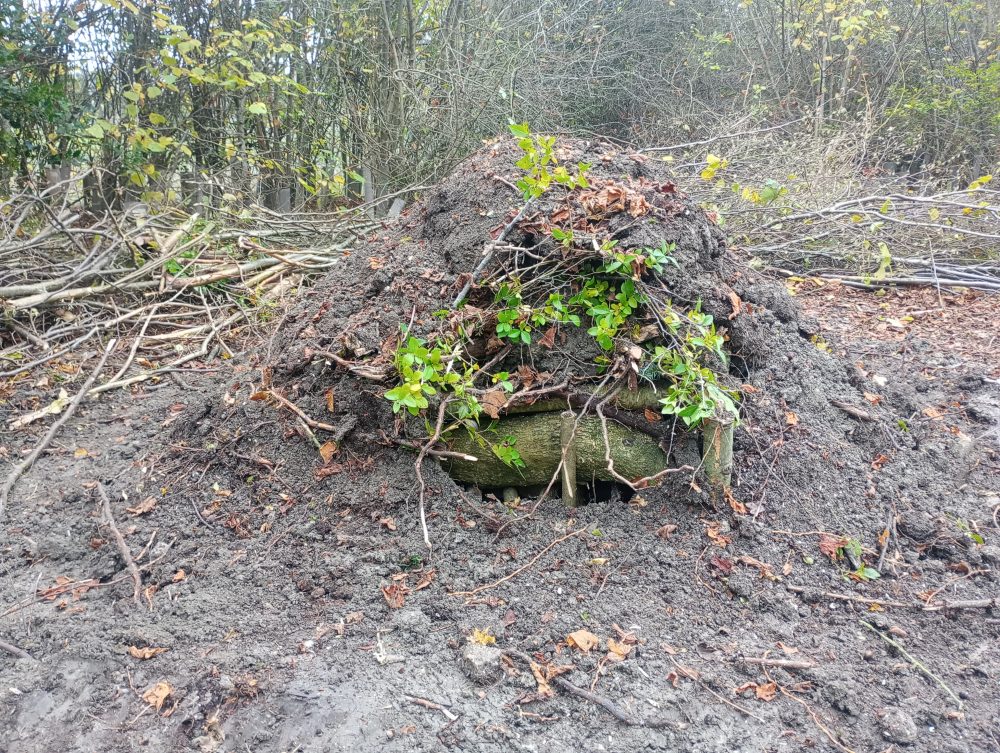
Three hibernacula were installed, using a mix of site won materials such as stone and logs to provide a variety of overwintering options for amphibians, reptiles, and invertebrates.
Bat Boxes
Boxes suitable for species such as Noctule, Daubentons, Pipistrelle and Bechsteins bats were placed on suitable trees, particularly near the rides and glades, where there is increased foraging opportunity.
Bird Boxes
A variety of bird boxes were installed, targeting different species such as Thrush, Tits and Firecrest. These were positioned at different heights and locations, offering nesting opportunities in both open and sheltered spots.
Dormouse Boxes
Dormouse boxes were placed approximately 1.5m from the ground in locations near to potential food sources with the entrance hole facing in towards the tree trunk to reduce occupation by birds.
Barn Owl Box
An Ash tree located in a suitable position for a barn owl box was found on site. The in-house arb team undertook aerial crown removal, turning the tree into a monolith (a tree reduced to its main stem) upon which the barn owl box was fixed.
Dead Hedge
The Keystone Habitats team created approximately 450 linear meters of 1-metre-tall dead hedge along the edges of the rides and glades.
Outcome
Enhanced biodiversity in line with BNG recommendations
The creation of rides and glades have significantly improved light penetration to the forest floor which should stimulate a more diverse range of ground flora. In addition, the improved foraging conditions should support a wider array of invertebrates and small mammals.
The coppicing and pollarding of trees has created a more varied woodland structure, providing different canopy levels and promoting the growth of bushy understory vegetation.
The creation of 450 linear meters of 1-meter-tall dead hedge was a significant additional habitat feature, over and above the BNG enhancement recommendations. This will provide commuting and refuge opportunities for a range of species, in particular dormouse and other small mammals.
Installing the dead hedge was the most efficient use of the felled woody material that would otherwise have had to be chipped and removed from site.
The creation of three hibernacula has provided critical overwintering habitats for herpetofauna and invertebrates.
The installation of a total of 23 bat and bird boxes as well as a single barn owl box has provided roosting and nesting locations that were otherwise lacking in the young plantations.
The installation of 12 dormouse boxes should help increase dormouse population density in the area.
No Impact to underground services
The careful planning and precise execution of works ensured that no disruption occurred to the underground services. Mapping, consultations with the client, the installation of ground protection crossing points and buffer zones around the services allowed for safe operations.
Conclusion
- The careful planning and implementation to avoid underground services meant no damage to services occurred and no health and safety protocols were breached.
- The Keystone Habitats team implemented all the BNG enhancements recommended by the Keystone Ecology team and instructed by the client.
- The successful use of habitat creation techniques such as coppicing and pollarding, the installation of wildlife boxes, dead hedges and hibernacula will no doubt provide ecological benefit. Follow up BNG assessments in the years to come will provide data that will feed into further enhancement recommendations if necessary.
- Most importantly the client was very happy with the professional manner in which all the works were undertaken and how the site was left at the end of the job.